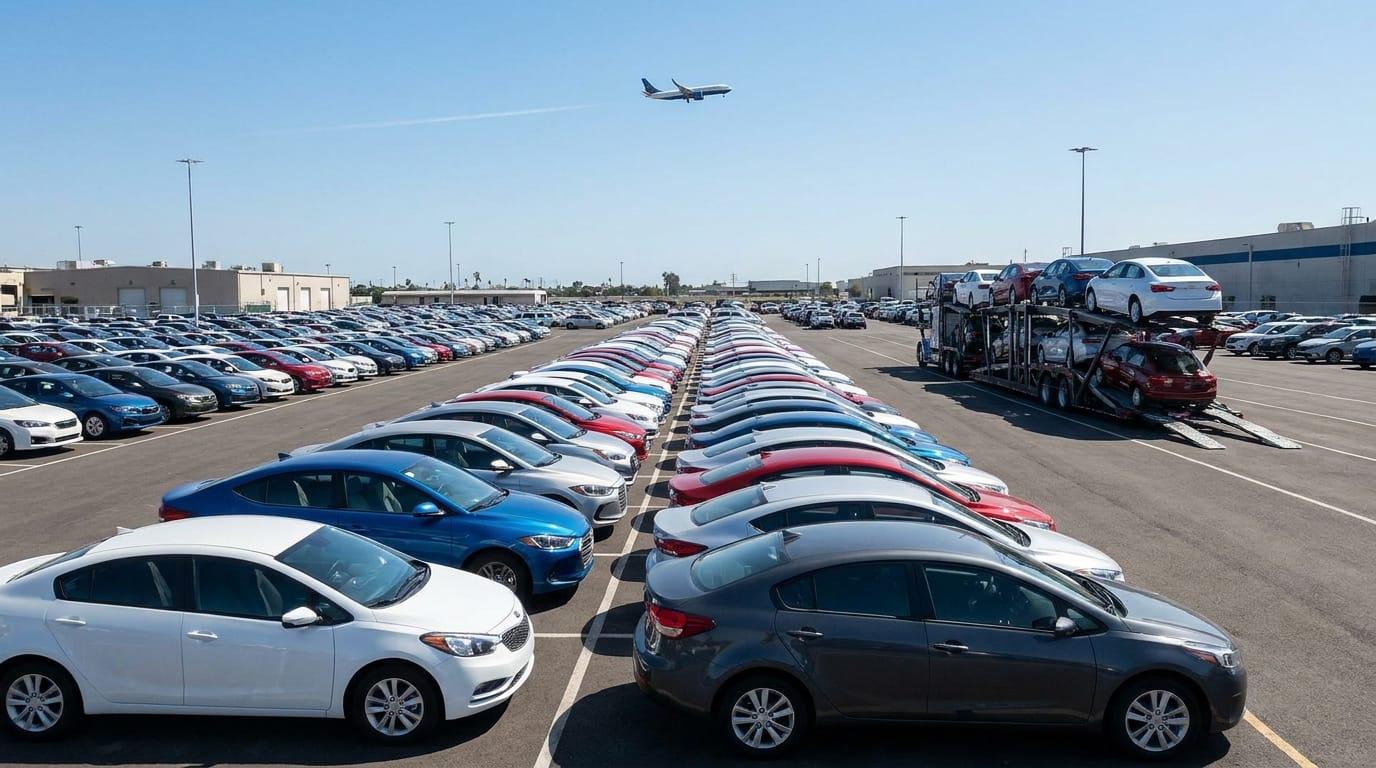
Rental demand never stays put. Winter brings travelers to Florida, Arizona, and Southern California, while summer pulls them toward national parks, beach towns, and mountain destinations. Sahara Auto Transport provides rental car fleet transport that helps agencies and franchise operators move vehicles to the markets that need them, so you are not turning away bookings in one city while cars sit idle in another.
Our team coordinates repositioning in batches that fit your counter operations. We move units between airport and neighborhood locations, bring new vehicles in from dealers and manufacturers' delivery points, and pull aging units out of service for remarketing. Your dedicated Sahara account contact works with your operations or fleet planning team to schedule pickups around return rushes, lot capacity, and cleaning and prep timelines, so cars arrive ready to rent rather than stacking up in an overflow lot.
Rental vehicles see a lot of hands, which makes condition documentation important. Each unit is inspected and photographed at pickup and delivery, giving your damage team a clear record of when and where any issue was noted. Combined with consolidated invoicing and net terms for approved accounts, our rental car transport process keeps both the operations and accounting sides running cleanly.
Rental operators we support
- Airport and neighborhood rental locations shifting inventory between markets
- Franchise and independent rental agencies balancing fleets seasonally
- Car sharing and subscription services relocating vehicles between cities
- Peer-to-peer hosts managing multiple vehicles in several markets
- Rental companies defleeting units to auctions or wholesale buyers
What you get
Why customers choose Sahara for this
Seasonal repositioning
Plan fall moves into snowbird markets and spring moves back out. We schedule capacity ahead of peak periods so your cars arrive before the rush.
Batch scheduling
Move vehicles in waves that match lot space and prep capacity, so receiving locations can check in, clean, and rent units without bottlenecks.
Damage-ready documentation
Photo inspections at both ends give your damage and claims team timestamped records that help separate transit issues from renter damage.
Defleet logistics
When units hit mileage or age limits, we move them to remarketing auctions, wholesale buyers, or dealers so they leave your lot on time.
One contact, one invoice
A dedicated Sahara coordinator manages every move and rolls them into consolidated invoicing, with net terms available for qualified accounts.
Step by step
How Rental Car Fleet Transport works
Mile 01
Share your fleet plan
Tell us which locations are sending and receiving, how many units, the vehicle classes, and the date you need them in service. Unit lists by location work best.
Mile 02
Capacity and schedule set
Sahara reserves carrier capacity on your lanes and proposes a batch schedule that fits both the sending lot's returns and the receiving lot's prep capacity.
Mile 03
Lot pickups
Drivers check in with location staff, inspect and photograph each unit, and record mileage and fuel level. Toll transponders and loose items should be removed first.
Mile 04
Delivery and check-in
Vehicles arrive at the receiving location for inspection and sign-off. Your team receives delivery confirmations and condition reports for each unit.
Pricing
What shapes your price
- 01Volume per batch and how often the lane repeats
- 02Distance between sending and receiving locations
- 03Peak season timing, when carrier demand is highest
- 04Vehicle class mix, such as economy cars versus large SUVs and passenger vans
- 05Airport lot access rules and pickup or delivery time windows
- 06Lead time between booking and required in-service date
Timing your seasonal fleet moves
Seasonal repositioning works best when it is booked well before the season starts. Carrier demand rises in the same windows that rental demand does, especially in the fall as snowbirds head south and again in late spring when they return north. Sending Sahara your projected volumes early lets us reserve capacity on your lanes and spread pickups over several weeks instead of cramming everything into a few days.
Airport locations often have strict access rules for car haulers, including designated loading zones, time restrictions, and security check-in. Share those details with us so we can brief carriers in advance. It also helps to remove toll transponders, phone mounts, and any lost-and-found items before pickup, and to note open recalls or service flags so units can be addressed on arrival.