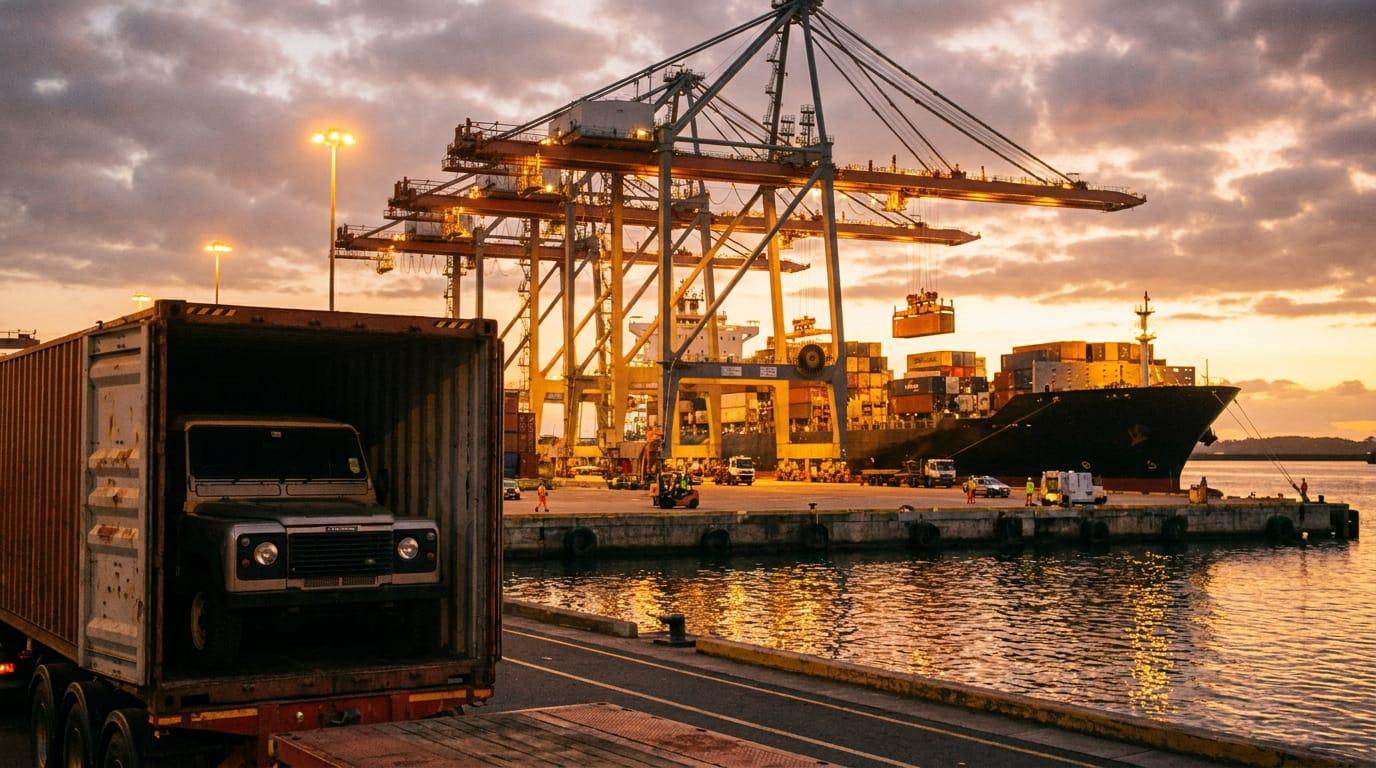
International auto shipping involves more moving parts than any domestic move: a truck ride to the port, customs clearance, an ocean voyage, and the rules of the country on the other end. Sahara Auto Transport takes the US side off your plate. We pick up your vehicle anywhere in the 50 states, deliver it to the right export port, and coordinate the ocean leg with licensed freight forwarders and ocean carriers who handle the filings and booking for international cargo.
You choose how the car travels. Roll-on, roll-off (RoRo) shipping drives the vehicle onto a specialized vessel like a floating parking garage, and it is often the most economical option for running cars. Container shipping places the vehicle inside a sealed steel box, either on its own or shared with other cars, which adds protection and can suit high-value, classic or non-running vehicles. We explain the differences for your destination and let you decide.
Bringing a vehicle into the United States works in reverse. Imported cars must meet EPA and DOT standards or qualify for an exemption, and that review happens before the car ever leaves the origin country. We coordinate with partners on the import side and then truck the vehicle from the US port of arrival to your door. Requirements change, so we confirm current rules when you book.
Who uses international car shipping
- Families relocating abroad who want to bring their own car
- Military and government personnel on overseas assignments
- Buyers exporting a vehicle purchased in the US
- Collectors shipping classic or exotic cars to overseas owners
- People importing a vehicle into the US that meets federal rules
What you get
Why customers choose Sahara for this
Container or RoRo
Pick shared container, exclusive container or roll-on, roll-off service based on your budget, vehicle and destination port.
Export document guidance
We tell you which originals to gather, from the clear title to lien releases, so customs clearance at the port is not a surprise.
Licensed partners on the water
Sahara coordinates with licensed freight forwarders and ocean carriers who handle international bookings and required filings.
Nationwide port trucking
We move your car from any state to the export port, or from the arrival port to your home, on open or enclosed carriers.
Clear expectations on costs
We explain what our quote covers and what falls under destination charges, so you can budget for duties and local fees.
Step by step
How International Auto Shipping works
Mile 01
Consultation and quote
Tell us the vehicle, pickup location and destination country. We outline container and RoRo options, the documents you will need, and a quote for the services we coordinate.
Mile 02
Documents and title clearance
You provide the original title and supporting paperwork. For US exports, the title and documents generally must be submitted to customs at least 72 hours before the vehicle sails, and our partners handle that filing.
Mile 03
Trucking to the export port
A Sahara carrier picks up the car at your address and delivers it to the port or consolidation warehouse on schedule for loading.
Mile 04
Ocean transit and destination clearance
The vehicle sails to the destination port, where you or your local agent handle import clearance, pay any duties and taxes, and collect the car.
Pricing
What shapes your price
- 01Container shipping versus roll-on, roll-off service
- 02Shared container versus exclusive use of a container
- 03Distance from your pickup address to the US export port
- 04Destination port and ocean route
- 05Vehicle size, value and running condition
- 06Optional services like marine insurance through partners or destination delivery
Paperwork, customs and who pays what
To export a vehicle from the US, you typically need the original clear title (or a lien release and lender authorization if it was financed), a bill of sale for recent purchases, and identification for the owner or shipper. Customs generally requires the title and export documents at least 72 hours before the vessel departs, and a licensed forwarder files the required export information. Vehicles with open liens, missing titles or name mismatches can be held, so sort those out first. Requirements change, so we confirm current rules when you book.
Every country sets its own import rules, emissions or safety standards, age limits and taxes. Duties, VAT, port fees and local registration at the destination are the customer's responsibility, and they can be significant, so research them or talk to a local customs broker before you ship. For imports into the US, the vehicle must meet EPA and DOT requirements or qualify for an exemption. Sahara focuses on the domestic transport and coordination, and our licensed partners handle the international filings.