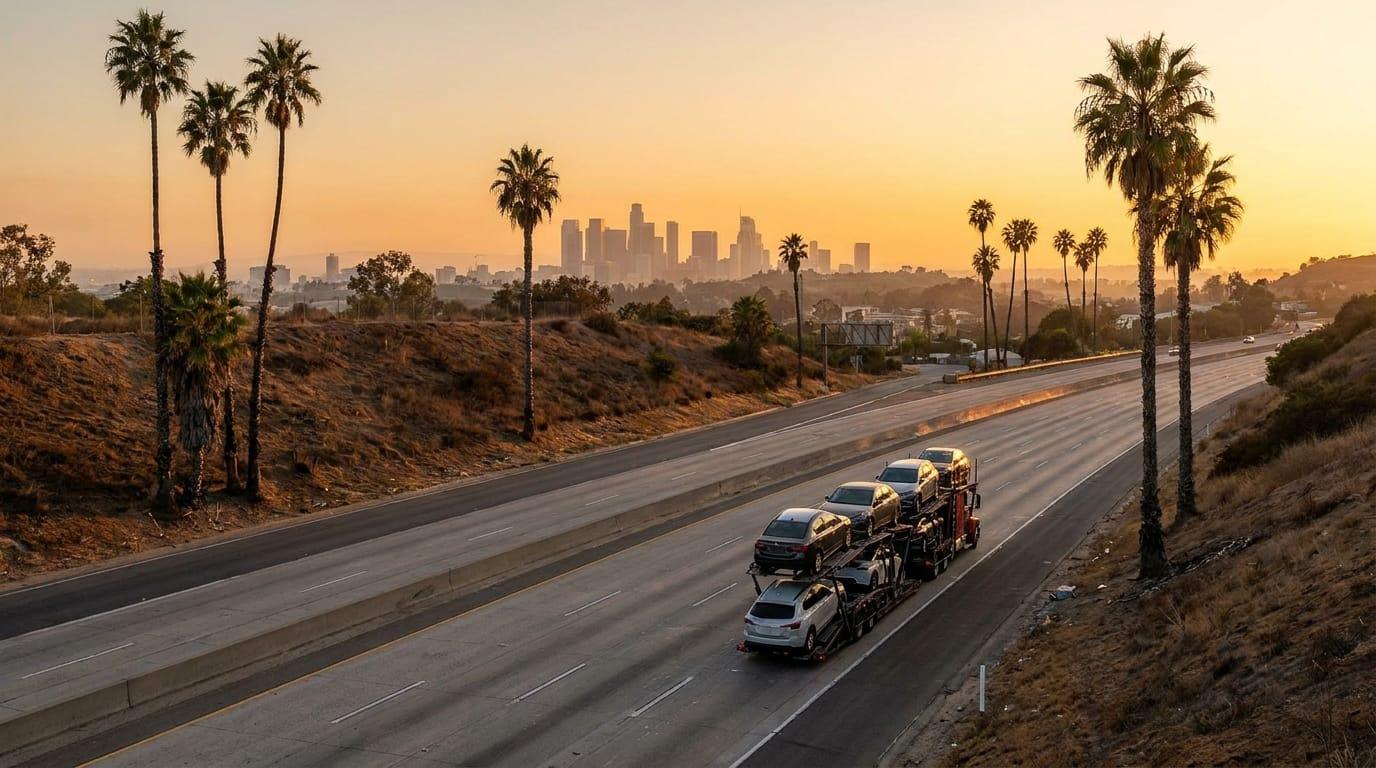
New York to California car shipping usually comes with a story: an entertainment job in Burbank, a startup offer in Palo Alto, a residency in San Diego, or simply one winter too many. Whatever is pulling you west, driving 2,800 miles takes five or six full days behind the wheel, plus hotels and meals. Shipping lets you fly from JFK, LaGuardia or Buffalo and pick up your car near your new place in Los Angeles, San Diego or the Bay Area.
Pickups in New York vary more than almost anywhere else on the map. Many Manhattan residents keep their cars in a garage, and the usual plan is to drive a few blocks to a spot where the carrier can stop safely. Queens and Brooklyn rowhouse blocks may need a nearby avenue or lot. On Long Island, in Westchester and across upstate cities like Rochester, Syracuse and Albany, curbside pickup is usually straightforward. Sahara Auto Transport sets that plan with you before dispatch.
California delivery has its own quirks. Hillside streets in Los Angeles, permit parking in Santa Monica and steep blocks in San Francisco often mean meeting the driver nearby rather than at your door. Once the car arrives, plan on a smog check and a DMV visit to register it. Our team in Hollywood, Florida stays in touch with you and the driver throughout the trip, seven days a week from 6am to 11pm Eastern.
Pricing
How much it costs to ship a car from New York to California
Estimated ranges for a typical trip of about 2,825 miles on this route, updated November 2026.
Sedan or coupe
- Open carrier
- $1,450 to $1,850
- Enclosed
- $2,250 to $2,875
SUV, crossover or minivan
- Open carrier
- $1,675 to $2,125
- Enclosed
- $2,600 to $3,300
Pickup or large SUV
- Open carrier
- $1,900 to $2,400
- Enclosed
- $2,925 to $3,725
- These are estimates, not quotes. Your exact price depends on the addresses, vehicle, condition, season and carrier availability.
- Non-running vehicles that need a winch usually add $150 to $250. Peak season and expedited pickup can raise the price.
Westbound routes out of New York
NYC pickups typically leave through New Jersey and head west on I-78 or I-80 across Pennsylvania. Many carriers continue on I-80 through Ohio, Indiana and Illinois toward Nebraska, Wyoming and Salt Lake City, then into Northern California over Donner Pass. That is the most direct path to Sacramento and the Bay Area, and it is the route of choice from late spring through early fall.
Southern California loads often take a southern path instead: I-81 down through the Shenandoah Valley, then I-40 across Tennessee, Arkansas, Oklahoma, the Texas Panhandle, New Mexico and Arizona to Barstow, and I-15 into the Inland Empire. Upstate pickups in Buffalo or Rochester can head west on I-90 along Lake Erie to Chicago, then either join I-80 or drop southwest on I-55 and I-44 to reach I-40 at Oklahoma City.
City to city
Popular New York to California trips
New York City, NY → Los Angeles, CA
2,790 miles · 7 to 10 days
Est. $1,450 to $1,850
Brooklyn, NY → San Francisco, CA
2,910 miles · 7 to 10 days
Est. $1,475 to $1,875
Long Island, NY → San Diego, CA
2,860 miles · 7 to 10 days
Est. $1,475 to $1,850
Westchester County, NY → Orange County, CA
2,790 miles · 7 to 10 days
Est. $1,450 to $1,850
Rochester, NY → Sacramento, CA
2,650 miles · 6 to 9 days
Est. $1,400 to $1,800
Albany, NY → San Jose, CA
2,900 miles · 7 to 10 days
Est. $1,475 to $1,875
Transit times start at pickup. Prices are November 2026 estimates for a running sedan on an open carrier, not quotes.
Timing a westbound move from New York
Demand out of New York toward California climbs from April through August. Many city leases end in late spring and summer, new graduates head west for jobs, and families try to move before the school year. Westbound slots are competitive in June and July, so book two to three weeks ahead if you have a firm date. Pricing tends to ease after Labor Day as summer moves wind down.
Winter shipping is possible and often less crowded, but it calls for patience. Lake-effect snow can delay upstate pickups around Buffalo, Rochester and Syracuse from November into March, and the Sierra Nevada section of I-80 regularly sees chain controls. Carriers usually move to the I-40 corridor in the coldest months to keep cars rolling toward the coast.
Before you book
Tips for this route
- If your car lives in a Manhattan garage, ask the attendants how much notice they need to bring it out, and plan the pickup time around that.
- Upstate owners shipping in winter should clear snow from the car and driveway before pickup and make sure the battery is strong, since the driver has to drive the car onto the trailer.
- Look up California's registration rules before you go. Most gas cars need a smog check, and new residents are expected to register soon after arriving, so the DMV visit belongs on your first-month to-do list.
- Remove your E-ZPass. California toll roads and Bay Area bridges use FasTrak, and you can open an account or pay by plate once you land.
- Plan your first California week assuming the car arrives at the later end of its window. A coast-to-coast trip crosses many weather systems, and a buffer keeps your schedule stress free.