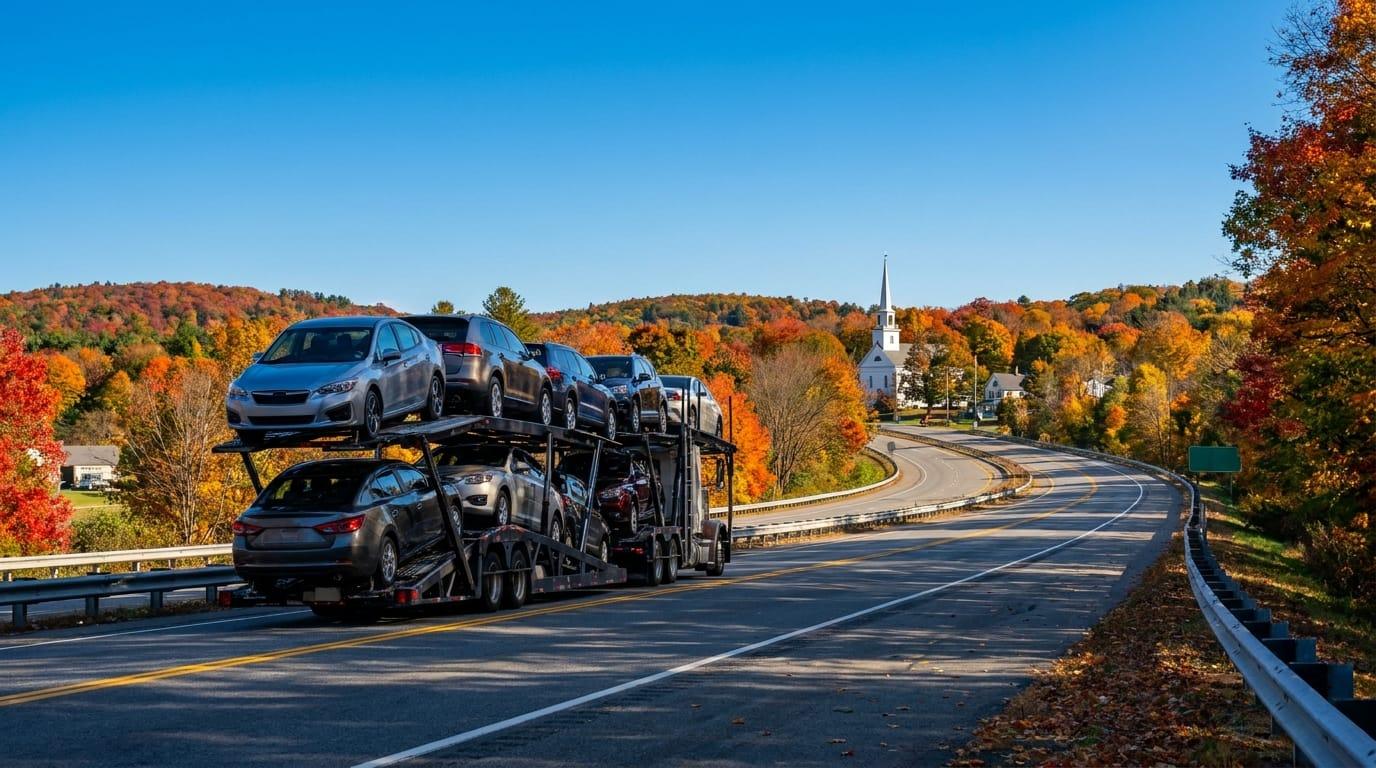
Texas to New York car shipping connects two of the biggest auto transport markets in the country across roughly 1,400 to 1,850 miles of interstate. When you ship a car from Texas to New York, carriers usually leave Dallas on I-30 toward Little Rock and Memphis, then follow I-40 and I-81 through Tennessee, Virginia and Pennsylvania, or start in Houston on I-10 and I-59 toward the Northeast. Dallas to New York auto transport typically takes 4 to 6 days after pickup, and we coordinate the full trip door to door.
Many Texas to New York moves are job transfers in finance, consulting, tech and healthcare, along with students heading to colleges in the city and upstate. Delivery is the tricky part. Much of Manhattan, Brooklyn and Queens is off-limits to a full-size car carrier because of low clearances, narrow streets and parkway restrictions on commercial vehicles, so drivers often meet customers at a large lot in New Jersey, on Staten Island or in the outer boroughs, or use a smaller truck for the final miles. We explain the options before you book so there are no surprises.
Weather can affect both ends of this lane. Gulf Coast hurricane season from June through November can delay pickups in Houston, Galveston and Beaumont, while North Texas sees spring hail and occasional ice storms. On the New York side, lake-effect snow off Lake Erie and Lake Ontario buries Buffalo, Rochester and Syracuse, and nor'easters hit the city and Long Island. Sahara Auto Transport monitors conditions along the whole route and keeps your delivery window realistic, especially between December and March.
Pricing
How much it costs to ship a car from Texas to New York
Estimated ranges for a typical trip of about 1,665 miles on this route, updated November 2026.
Sedan or coupe
- Open carrier
- $1,125 to $1,450
- Enclosed
- $1,750 to $2,225
SUV, crossover or minivan
- Open carrier
- $1,300 to $1,650
- Enclosed
- $2,025 to $2,575
Pickup or large SUV
- Open carrier
- $1,475 to $1,875
- Enclosed
- $2,275 to $2,900
- These are estimates, not quotes. Your exact price depends on the addresses, vehicle, condition, season and carrier availability.
- Non-running vehicles that need a winch usually add $150 to $250. Peak season and expedited pickup can raise the price.
Texas to New York by interstate
From Dallas and Fort Worth, the common route is I-30 northeast to Texarkana and Little Rock, then I-40 east across Arkansas and Tennessee through Memphis, Nashville and Knoxville, and finally I-81 up the Shenandoah Valley through Virginia, Maryland and Pennsylvania. Northeast of Harrisburg, drivers take I-78 east across Pennsylvania and New Jersey toward New York City, or stay on I-81 north to Binghamton and Syracuse for upstate deliveries. Buffalo and Rochester cars often swing north from Nashville through Ohio on I-71 and I-90 instead.
Houston loads often take I-10 east through Beaumont and Baton Rouge, then I-59 through Mississippi and Alabama to Chattanooga, where they pick up I-75 and I-40 to join the I-81 corridor; Austin and San Antonio cars sometimes run up I-35 to Dallas first. The final approach into New York, whether over the Goethals Bridge, the Outerbridge Crossing or the George Washington Bridge, is usually the slowest part of the trip.
City to city
Popular Texas to New York trips
Dallas, TX → New York, NY
1,550 miles · 4 to 6 days
Est. $1,100 to $1,400
Houston, TX → New York, NY
1,630 miles · 4 to 6 days
Est. $1,125 to $1,425
Austin, TX → Brooklyn, NY
1,740 miles · 5 to 7 days
Est. $1,150 to $1,475
San Antonio, TX → Long Island, NY
1,850 miles · 5 to 7 days
Est. $1,200 to $1,525
Fort Worth, TX → Buffalo, NY
1,400 miles · 4 to 6 days
Est. $1,050 to $1,325
Houston, TX → Albany, NY
1,700 miles · 5 to 7 days
Est. $1,150 to $1,450
Transit times start at pickup. Prices are November 2026 estimates for a running sedan on an open carrier, not quotes.
Seasonal demand from Texas to New York
Summer is the busiest season for northbound Texas loads, driven by job starts, internships and college move-ins in New York City and upstate college towns. From June through August, booking at least two weeks ahead helps secure a carrier. Late spring brings another bump as winter residents of the Rio Grande Valley head back north, although many of them are bound for the Midwest rather than New York.
Winter is the slow season on this lane, which can make scheduling easier, but it carries the most weather risk. Snow on I-81 through Virginia and Pennsylvania, lake-effect bands upstate and nor'easter conditions around the city can each add a day or two. On the Texas side, hurricane season mostly affects Houston-area pickups from August through October.
Before you book
Tips for this route
- New York generally expects new residents to register a vehicle within about 30 days and requires a New York safety inspection after registration; check the New York DMV for current rules.
- If you live in Manhattan or a dense part of Brooklyn or Queens, plan to meet the driver at a larger lot or accept delivery at a terminal, since carriers cannot use the parkways or stop on many city streets.
- Texas toll tags such as TxTag, EZ TAG and TollTag do not work on the E-ZPass network, so set up an E-ZPass account for the bridges, tunnels and Thruway in New York.
- New York requires proof of New York auto insurance to register, so contact your insurer about switching your policy before the car arrives.
- For a Houston pickup during a tropical storm watch, keep your phone on and the car accessible, since we may move pickup a day earlier or later to stay ahead of the weather.