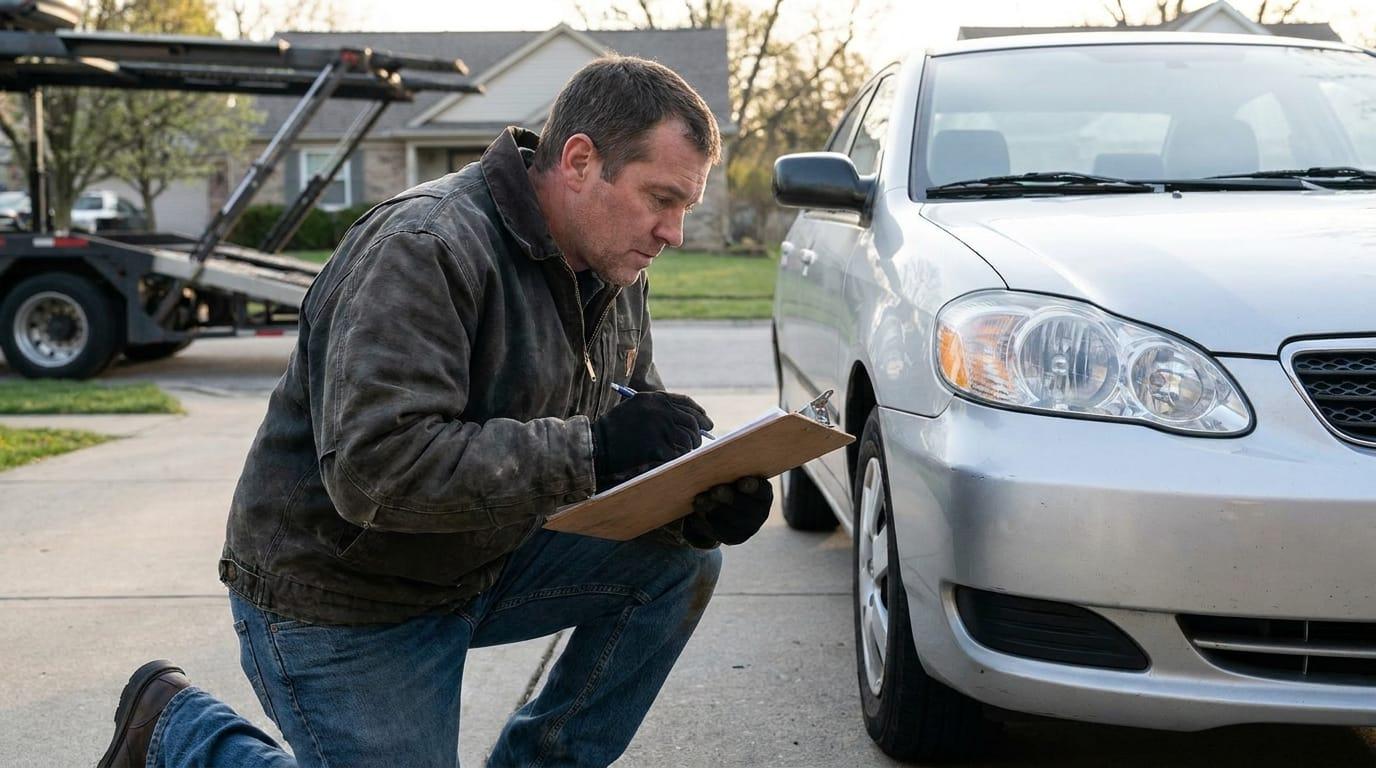
To prepare your car for shipping, wash it, photograph every side with timestamps, remove personal items and loose accessories, leave about a quarter tank of fuel, disable the alarm, fold in the mirrors, take out toll tags, check for leaks and proper tire pressure, and have a spare key ready for the driver. Then review the Bill of Lading carefully at pickup. Each step takes only minutes, and together they make your shipment smoother, safer, and easier to document.
Your Car Shipping Checklist at a Glance
Use this quick checklist in the days before pickup. We explain each item in more detail below.
- Wash the exterior so damage is easy to see.
- Take clear, timestamped photos and video of the whole vehicle.
- Remove personal belongings and loose items from the cabin and trunk.
- Run the fuel down to about a quarter tank.
- Check for fluid leaks, battery charge, and tire pressure.
- Disable or note the car alarm and any anti-theft features.
- Fold in side mirrors and retract or remove the antenna.
- Remove toll tags and parking passes.
- Secure or remove loose exterior parts like bike racks and spoilers.
- Have a working key (and spare, if available) ready for the driver.
- Inspect the car with the driver and note existing damage on the Bill of Lading.
Clean Your Car and Document Its Condition
A clean car is not about looks. Dirt and dust can hide scratches, dents, and chips, which makes it harder to agree on the vehicle's condition at pickup and delivery. Wash the exterior a day or two before your pickup date, and clean out the interior while you are at it.
Next, photograph the car from every angle in good daylight. Your phone's camera automatically records the date and time in each photo's data, which gives you a reliable record. Capture:
- All four sides, plus the front and rear at an angle
- Close-ups of existing scratches, dents, chips, and curb rash on wheels
- The roof, hood, and windshield
- The odometer reading and dashboard with no warning lights
- A slow walk-around video as a backup
Remove Personal Items and Accessories
Can you leave stuff in your car when shipping it? It is best not to. Auto carriers are licensed to transport vehicles, not household goods, and a carrier's cargo insurance generally covers the car itself rather than belongings inside it. Extra weight can also cause problems with the truck's load limits. Some carriers allow a small amount of items in the trunk, but always ask first and never leave anything valuable.
- Clear out electronics, chargers, sunglasses, and documents
- Remove garage door openers and spare house keys
- Take out child seats and loose floor mats if they slide around
- Remove removable GPS units, dash cams, and phone mounts
- Empty the glove box and center console of anything personal
Mechanical Checks Before Pickup
Your car needs to roll on and off the trailer safely, so a few quick mechanical checks go a long way. These also help you avoid extra fees for a vehicle that turns out to be inoperable on pickup day.
- Fuel: Leave about a quarter tank. That is enough to load, unload, and reach a nearby gas station, without adding unnecessary weight.
- Leaks: Look under the car for fresh drips. Active leaks can damage vehicles below yours on a carrier, so let your shipping company know about any known issue.
- Tires: Inflate tires to the pressure listed on the driver's door jamb. Underinflated tires are harder to load and secure.
- Battery: Make sure the battery is charged and the car starts reliably. EV owners should leave a moderate charge so the car can be driven on and off the trailer.
- Parking brake: Confirm it works properly, since the driver will use it once the car is in position.
If your car does not run, tell your shipper when you book. Non-running vehicles can absolutely be shipped, but they need a carrier with a winch, and the quote should reflect that.
Secure the Exterior and Disable the Alarm
A car alarm that goes off mid-route is a headache for the driver and can drain your battery. Turn off the alarm if possible, or leave clear written instructions for disabling it. Then take care of the exterior details:
- Fold in the side mirrors and lower or remove the antenna
- Remove electronic toll tags so you are not charged as the carrier passes through toll plazas
- Take off bike racks, cargo boxes, and roof baskets
- Secure or remove loose spoilers, body kits, or trim pieces
- Make sure convertible tops are closed and secured, with any tears noted
If your vehicle has aftermarket modifications such as a lift kit, lowered suspension, or oversized tires, mention them when you book. Height and ground clearance affect which trailer position and equipment the carrier uses, and a lowered car may need an enclosed trailer with a liftgate or extra-long ramps. Sharing these details upfront prevents surprises on pickup day and helps your shipper assign the right truck the first time. The same goes for classic cars with quirks like a manual choke or an unusual starting routine: write the steps down for the driver.
Keys, Paperwork, and the Bill of Lading
The driver needs a working key to move your car on and off the trailer. If you have a spare, keep it with you so you are covered if anything goes wrong. Key fobs, valet keys, and any special starting instructions should be handed over at pickup.
The Bill of Lading is the most important document in your shipment. It works as your receipt and as the official condition report. At pickup, walk around the car with the driver and make sure every existing scratch, dent, or chip is marked on the form. Do not sign until you agree with what is written. At delivery, repeat the inspection before signing again, and note any new damage directly on the Bill of Lading before the driver leaves.
Get Ready to Ship With Sahara Auto Transport
Preparing your car for shipping is simple when you know what to expect. When you book with Sahara Auto Transport, our team confirms the details of your vehicle, pickup location, and timing ahead of time, so pickup day goes smoothly. We ship cars, trucks, SUVs, motorcycles, and non-running vehicles in all 50 states.
Have questions about your specific car? Get a free quote online or call Sahara at 888-509-8666, and we will help you get everything ready before the truck arrives.