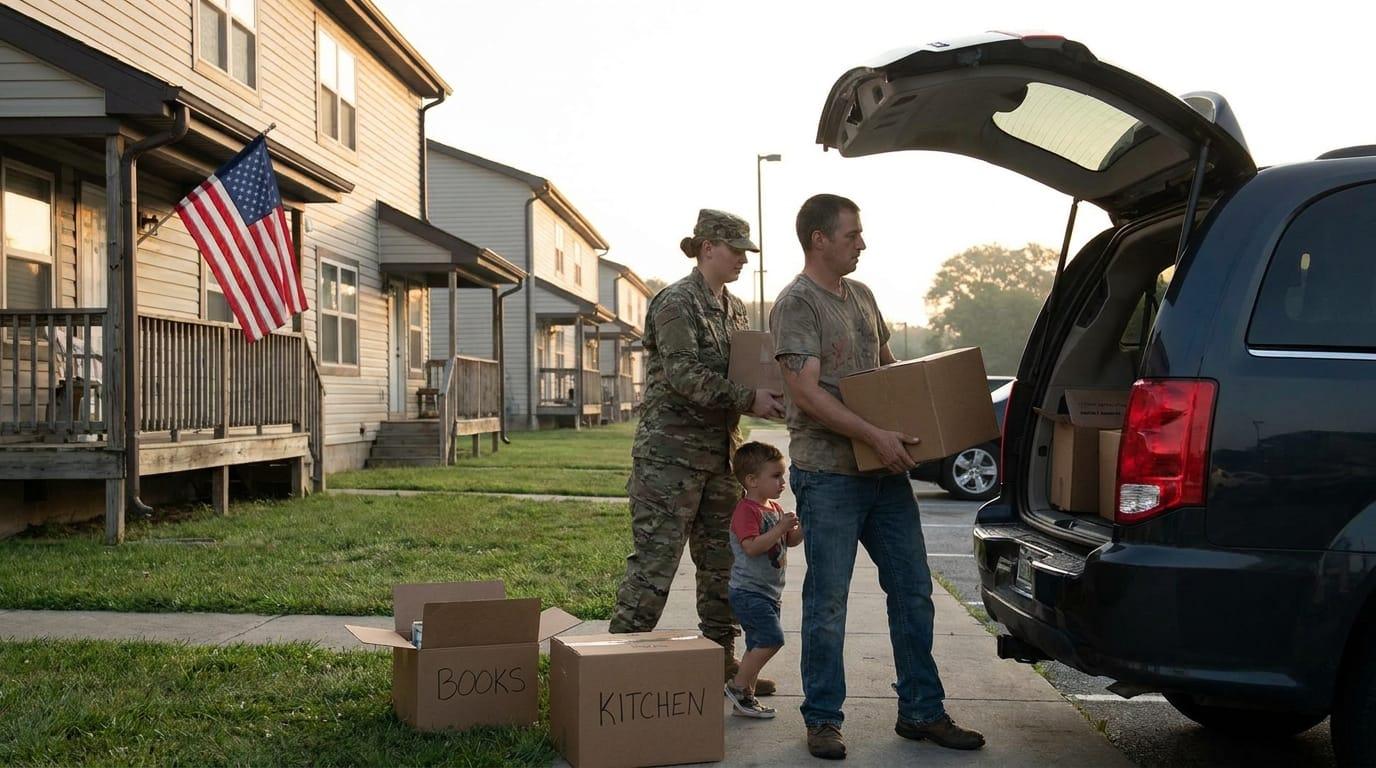
Military PCS car shipping within the continental United States (CONUS) usually works differently than an overseas move. On most stateside PCS moves, the government expects you to drive your privately owned vehicle (POV) and pays travel allowances for the trip, rather than shipping the car for you. If you choose to ship instead, you typically book and pay for it yourself, and whether any of that cost can be reimbursed depends on your orders and entitlements. Before you book, check your Joint Travel Regulations (JTR) entitlements and talk to your installation transportation office.
This guide covers the general picture: when shipping makes sense, what records to keep, how to time pickup around your report date, and the practical details like power of attorney and base access that trip up a lot of service members and families.
Does the Military Ship Your Car on a CONUS PCS?
For overseas assignments, government shipment of a POV is common and runs through designated vehicle processing centers. Stateside moves are another story. In most CONUS PCS moves, the default expectation is that you drive. Government-funded POV shipment within CONUS is generally limited to specific circumstances, and the details depend on your situation and current regulations.
Because rules are updated and individual situations vary, treat this article as a starting point, not a final answer. Your installation transportation office (sometimes called the TMO or PPPO, depending on your branch and base) is the authority on what you are entitled to.
Paying Yourself and Filing for Reimbursement
Many families ship a second car, or ship the only car because the drive is long and the timeline is tight. Some people ship because one spouse is flying with kids or pets, while the service member reports early. In these cases you usually pay the transport company directly. Depending on your orders, part of your cost might be offset by allowances you would have received for driving, or it might be entirely out of pocket. Do not assume either way until you confirm.
- Ask your transportation office, before booking, whether shipping affects your travel allowances and what documentation they require.
- Keep a copy of your PCS orders and any amendments with your shipping paperwork.
- Save the signed Bill of Lading from pickup and delivery.
- Keep the paid invoice or receipt from the transport company showing the amount, dates, and vehicle.
- Write down the vehicle year, make, model, and VIN as they appear on your registration.
Timing Your PCS Car Shipping Around Your Report Date
The goal is to have the car at your new duty station shortly after you arrive, without giving it up so early that you are stranded during out-processing. Coast-to-coast moves generally take longer than regional ones, so build in buffer.
| When | What to do |
|---|---|
| As soon as you have orders | Confirm entitlements with your transportation office and request shipping quotes. |
| 3 to 4 weeks before pickup | Book your shipment and confirm pickup and delivery addresses. |
| 1 to 2 weeks before pickup | Arrange power of attorney if someone else will release or receive the car. |
| Pickup week | Clean out the car, photograph it, and walk around it with the driver. |
| After arrival | Plan a few days of backup transportation in case the car lands after you do. |
Many members plan pickup for the last few days at their old station, using a loaner, a friend, or a rental to finish out-processing. If you are driving one car and shipping another, you can schedule delivery to line up with your own arrival.
Power of Attorney: When Someone Else Hands Off the Car
PCS schedules rarely line up perfectly. You might be in the field on pickup day, or reporting to your new unit before the car arrives. In those cases, a spouse, friend, or fellow service member can release or receive the vehicle for you.
- Your base legal assistance office can often prepare a special power of attorney that covers releasing and receiving a vehicle.
- If the car is titled jointly, check whether the other owner can act without a power of attorney.
- If the car is financed or leased, ask your lender whether it has any requirements for the vehicle moving to another state.
- Give your shipper the name and phone number of the person acting for you, and make sure they will have the keys.
- Your representative should inspect the car with the driver and sign the Bill of Lading just as you would.
Base Access for Car Shipping Drivers
Here is a detail many first-time shippers miss: a large car carrier and its civilian driver usually cannot simply roll through the gate onto an installation. Access rules vary by base and can change with security conditions, and big rigs often cannot maneuver through on-base housing streets anyway.
- Plan to meet the driver at a nearby public spot with room for a large truck, such as a big retail parking lot.
- If you live off base, door-to-door service to your home is usually simpler.
- If on-base delivery is important, contact the installation visitor center ahead of time to learn what a commercial driver would need.
- Keep your phone on during the delivery window, since drivers typically call ahead to set a meeting point.
Preparing Your Vehicle for a PCS Move
- Remove personal items, including uniforms, gear, and documents. Carriers are not licensed to move household goods.
- Take off base decals or registration stickers only if your installation requires it.
- Leave about a quarter tank of fuel and make sure the battery is charged.
- Note any mechanical issues so the driver knows how to load the car safely.
- Keep your registration and proof of insurance current, and plan to update them for your new state if needed.
Choosing a Shipper for Your PCS
Look for a company that is registered with the Federal Motor Carrier Safety Administration, explains its pickup windows clearly, and gives you a written Bill of Lading and invoice you can submit with any claim. Flexibility matters on a PCS, because orders and report dates can shift.
- What happens if my orders change or my report date moves? Is there a fee to reschedule or cancel?
- Will I receive an itemized invoice with the vehicle, VIN, route, and dates?
- Can you deliver to an off-base address or a nearby public meeting point?
- Do you offer enclosed transport for a high-value car, or transport for a truck or motorcycle?
- Who is my point of contact if I am in the field or traveling on pickup day?
At Sahara Auto Transport, we are glad to answer these questions before you book, and you will receive a Bill of Lading and invoice showing the vehicle and shipment details you will want for your records.
Sahara Auto Transport ships vehicles for service members and military families in all 50 states, including second cars, trucks, and motorcycles. Request a free quote or call 888-509-8666, and we will help you set a pickup window that works with your report date.